
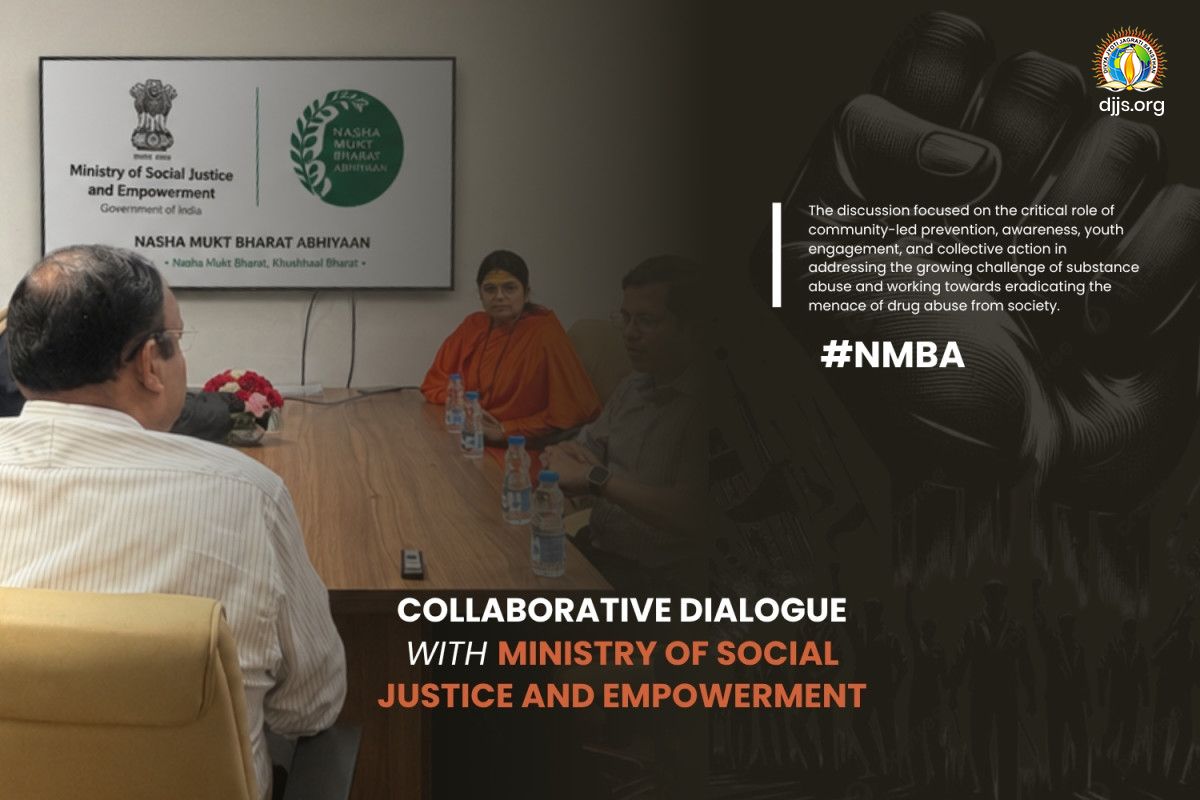
Divya Jyoti Jagrati Sansthan (DJJS), through its BODH – The Drug Abuse Eradication Program, engaged in a constructive dialogue with Dr. Sandeep R. Rathod, Joint Secretary, Drug Prevention & Planning Division, Department of Social Justice & Empowerment, Government of India, to deliberate on key issues and collaborative strategies towards building a Drug-Free India.
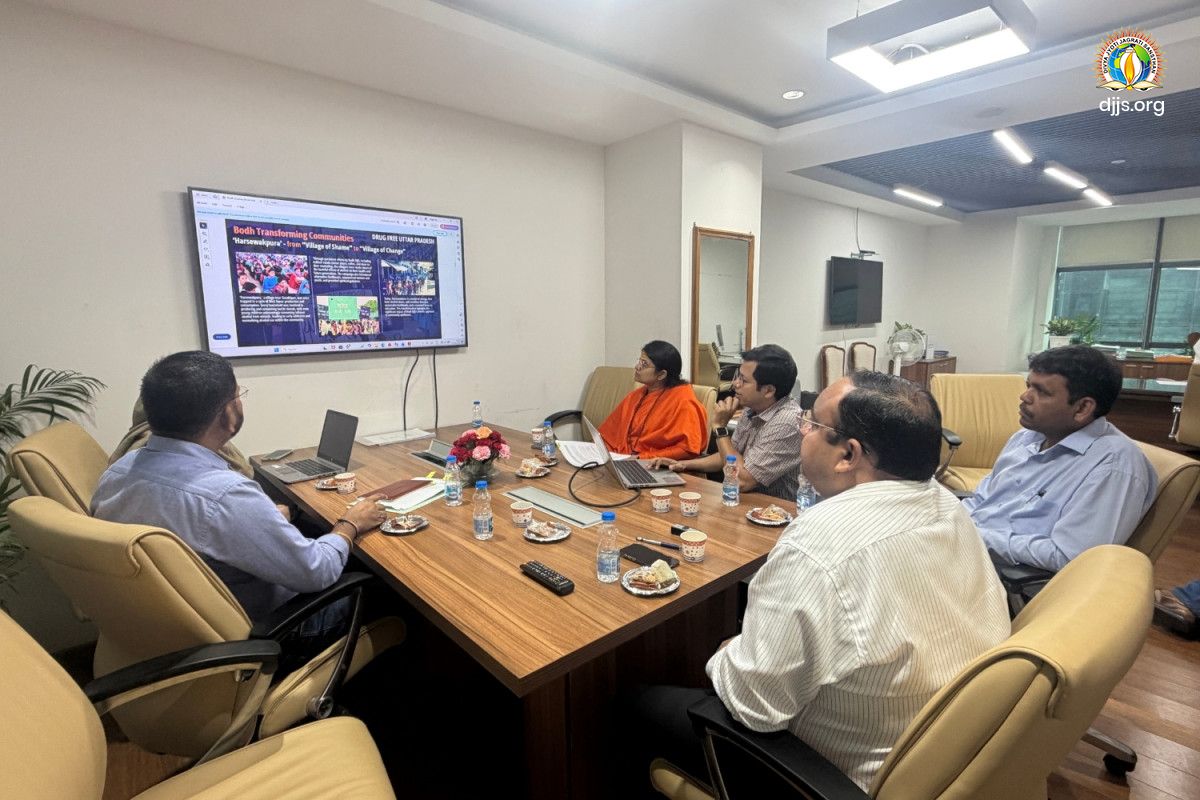
The dialogue brought together perspectives from the government and civil society on the need to strengthen preventive action against drug abuse. It focused on creating sustained, community-oriented interventions that address the social, behavioural and environmental factors associated with substance abuse while encouraging individuals, families, youth and communities to become active stakeholders in prevention.
Representing Divya Jyoti Jagrati Sansthan, the DJJS delegation comprised Sadhvi Shitabha Bharti, Coordinator, BODH – The Drug Abuse Eradication Program of DJJS, along with Mr. Gaurav Gupta and Mr. Gaurav Singh. Their participation reflected DJJS's institutional commitment to contributing to national efforts for drug abuse prevention and strengthening meaningful partnerships with key stakeholders working towards a drug-free society.
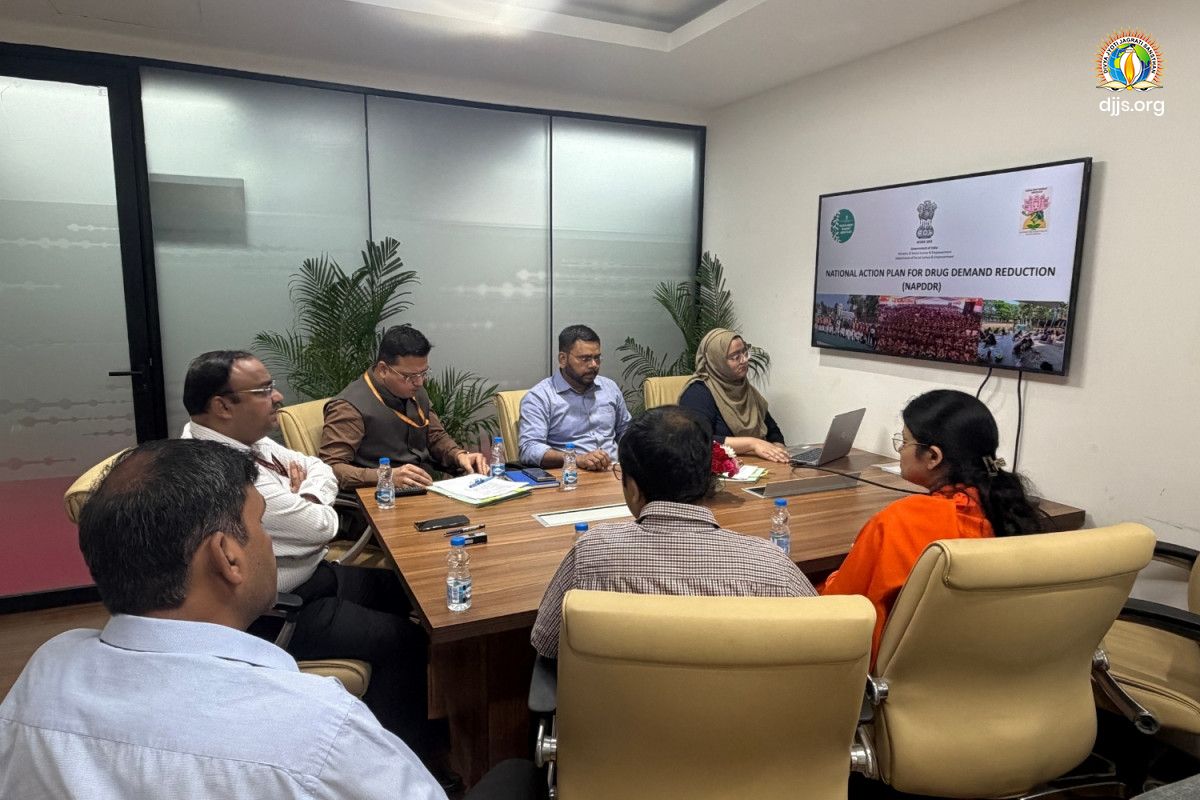
A significant area of discussion was the critical role of community-led prevention. Drug abuse is a complex social challenge that requires action not only after dependency has developed, but also before individuals enter the cycle of substance use. Community-based awareness and preventive initiatives can help identify vulnerabilities, encourage informed decision-making and create supportive environments that discourage substance use.
The dialogue also highlighted the importance of awareness and preventive education. Drug abuse can have far-reaching consequences, affecting physical and mental well-being, family relationships, education, livelihood and social development. Prevention, therefore, needs to become an ongoing collective effort rather than being limited to occasional awareness campaigns.
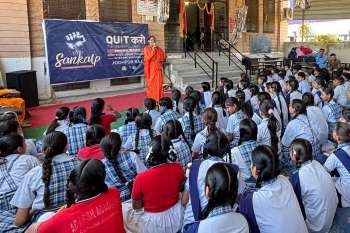
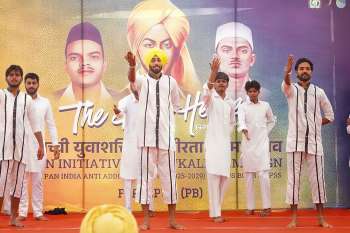
Youth engagement emerged as another important dimension of the discussion. Young people can play a significant role in shaping a healthier social environment and become powerful advocates for positive choices and responsible living. Awareness programmes, educational initiatives, peer interaction, community activities and leadership opportunities can help channel youthful energy towards constructive and purposeful action.
The meeting further emphasised that the challenge of drug abuse cannot be addressed by any one institution working in isolation. Government institutions, civil society organisations, community groups, educational institutions, families and citizens all have an important role to play. Greater coordination among these stakeholders can expand outreach, strengthen awareness, encourage early intervention and help build more resilient communities.
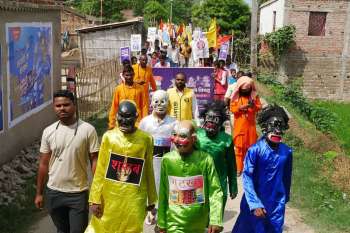
For DJJS BODH, the dialogue represents an important opportunity to further strengthen its contribution to the national vision of a Nasha Mukt Bharat. Through its preventive initiatives and community outreach, BODH continues to promote awareness, empower communities, encourage healthy and responsible choices, and address the social factors that can contribute to drug abuse.
The discussion also reaffirmed the importance of connecting policy-level initiatives with grassroots action. While government programs provide vital national direction and a framework for action, civil society organizations and community networks play an important role in taking preventive messages and interventions closer to people. Such collaboration can help transform the vision of a Drug-Free India into sustained action at the community level.
The dialogue concluded with a shared recognition that continued collaboration and collective responsibility are essential to addressing the challenge of drug abuse. Building a drug-free society requires sustained commitment, stronger partnerships, informed communities and empowered citizens working towards a common goal.
For DJJS and BODH, this engagement further reinforces their commitment to contributing to this national endeavour and supporting a future where prevention, awareness, youth participation and community action become integral to the fight against drug abuse.
Together, through institutional collaboration and collective action, the vision of a healthier, safer and Drug-Free India can be transformed from a national aspiration into a sustained social movement.